
What to Pack in a Dominican Republic First-Aid Kit ?

Essential Travel Health Items for a Safe Caribbean Holiday

Planning a trip to the Dominican Republic means preparing for tropical beaches, warm weather, outdoor adventures and unforgettable excursions. Whether you are staying at an all-inclusive resort in Punta Cana, exploring the streets of Santo Domingo, visiting the countryside or taking a boat trip to Saona Island, packing a travel first-aid kit can help you manage minor health problems during your holiday.

Although pharmacies and medical facilities are available in many tourist areas, finding the exact product you need may take time, especially when you are away from your hotel or travelling to a more remote destination. Having essential supplies readily available can make it easier to deal with minor cuts, headaches, insect bites, digestive discomfort and other common travel inconveniences.

So, what should you pack in your travel first-aid kit for the Dominican Republic? The ideal kit depends on your medical needs, the length of your stay and the activities you have planned. Here is how to prepare a practical kit before leaving home. 

Why Should You Bring a First-Aid Kit to the Dominican Republic?

The Dominican Republic has a tropical climate, with warm temperatures and high humidity throughout much of the year. Visitors often spend more time outdoors than usual, enjoying the beach, swimming, snorkelling, hiking, sightseeing and boat excursions.

These activities can sometimes lead to minor problems, such as sunburn, dehydration, blisters, insect bites or small cuts. Changes in diet and routine can also cause digestive discomfort, while long journeys and busy holiday schedules may contribute to headaches or fatigue.

A small first-aid kit allows you to respond quickly to minor issues without immediately searching for a pharmacy. It is particularly useful when travelling with children, visiting several destinations or participating in excursions away from major tourist centres.

However, a first-aid kit is not a substitute for professional medical care. Serious injuries, severe allergic reactions, persistent vomiting, significant dehydration or symptoms that are getting worse require appropriate medical attention. 

What Essential Items Should Your Travel First-Aid Kit Contain?

Plasters, bandages and wound-cleaning supplies

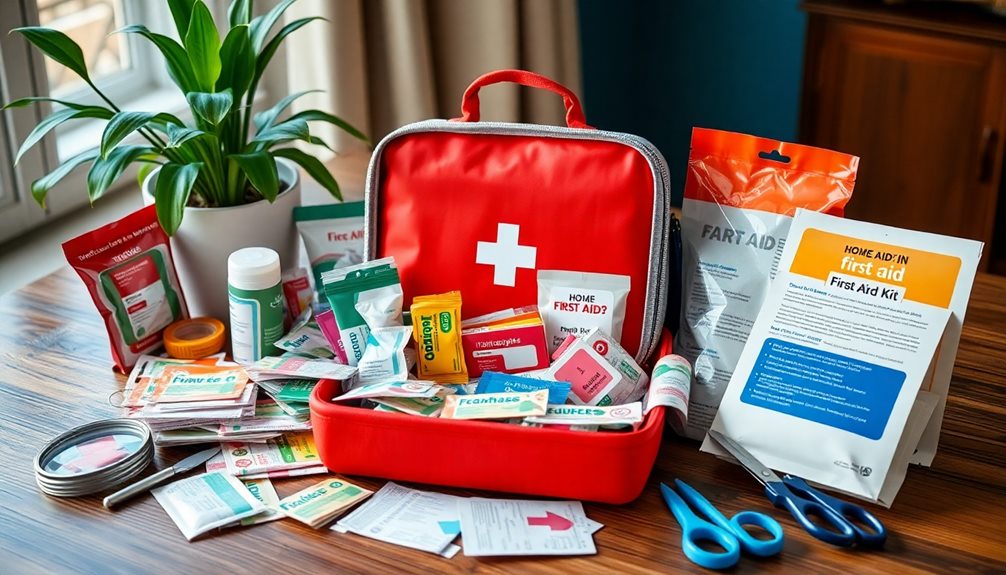
Small cuts, grazes and blisters can happen while walking, exploring natural areas or wearing sandals in hot weather. Pack adhesive plasters in different sizes, sterile gauze pads, medical tape and a small pair of blunt-ended scissors, provided they comply with your airline’s baggage rules.

Include individually packaged antiseptic wipes or another suitable wound-cleaning product. A saline solution can also be useful for rinsing minor wounds when appropriate.

Blister plasters are particularly helpful if you plan to explore towns on foot, go hiking or spend long days sightseeing. Even comfortable shoes can cause friction in hot, humid conditions.

Clean minor wounds with clean water or an appropriate saline solution, cover them with a sterile dressing and change the dressing when necessary. Seek medical advice if a wound is deep, becomes increasingly red or swollen, develops pus or causes worsening pain.

Pain relief and fever medication

A familiar over-the-counter pain reliever may be useful for headaches, muscle soreness or fever. Choose a product that is appropriate for your age, medical history and other medications, and follow the package instructions carefully.

Paracetamol, also known as acetaminophen, is one option for many travellers. However, people with liver disease or other relevant medical conditions should check with a healthcare professional before using it.

Be particularly cautious with anti-inflammatory medicines such as ibuprofen or aspirin if you develop a fever during your stay. Dengue fever occurs in the Dominican Republic, and these medicines can increase bleeding risks in people with dengue. If you develop a fever, seek medical advice and avoid aspirin and ibuprofen until dengue has been ruled out by a healthcare professional.

Check the active ingredients in combination medicines to avoid accidentally taking the same medication twice. If you are travelling with children, bring age-appropriate formulations and confirm the correct dose with a healthcare professional.

Thermometer and basic medical supplies

A compact digital thermometer is a useful addition to your kit. It can help you check whether you have a fever if you begin feeling unwell during your holiday.

You may also want to pack disposable gloves, tweezers for removing small splinters, hand sanitiser and a few disposable bags for storing used dressings or keeping supplies separate.

Keep these items in a clean, waterproof pouch. Store the kit somewhere cool and dry, away from direct sunlight, and check the storage instructions for any medicines that may be affected by heat. 

How Can You Protect Yourself from Sunburn and Heat?

High-SPF sunscreen and after-sun care

Strong sunshine is one of the main considerations when visiting a tropical destination. Even when the sky is cloudy or a sea breeze makes the temperature feel comfortable, ultraviolet radiation can still damage your skin.

Pack broad-spectrum sunscreen with SPF 30 or higher, preferably SPF 50 if you burn easily or expect to spend extended periods outdoors. Apply it generously before sun exposure and reapply at least every two hours, as well as after swimming, sweating or towel drying, according to the product instructions.

A soothing moisturiser may help relieve dry skin after sun exposure, but it does not reverse sun damage. If you experience severe sunburn with extensive blistering, marked swelling, fever or signs of dehydration, seek medical attention.

A wide-brimmed hat, sunglasses and lightweight clothing that covers your shoulders are also important. These items are not technically first-aid supplies, but they can help prevent problems before they start.

Oral rehydration salts and hydration supplies

Heat and humidity can increase fluid loss, particularly during outdoor activities, prolonged sun exposure or episodes of diarrhoea and vomiting. Oral rehydration salts are useful to have available because they help replace water and essential electrolytes lost through dehydration.

Pack commercially prepared oral rehydration sachets and follow the instructions for mixing them with safe drinking water. Do not make the solution stronger or weaker than directed.

Drink water regularly throughout the day, especially when walking, snorkelling, hiking or spending time on a boat. Take breaks in the shade and avoid waiting until you feel very thirsty before drinking.

Confusion, fainting, severe weakness, persistent vomiting or an inability to keep fluids down can indicate a serious problem and require urgent medical assessment. Someone with suspected heatstroke, particularly confusion or altered consciousness after heat exposure, needs emergency medical care rather than simply more water. 

What Should You Pack for Insect Bites and Tropical Conditions?

Insect repellent

Mosquitoes are present in the Dominican Republic, and some mosquitoes can transmit illnesses such as dengue, chikungunya and Zika. Insect protection is therefore an important part of travel preparation.

Choose a registered insect repellent containing an effective ingredient such as DEET or picaridin, and follow the label instructions. Apply it to exposed skin as directed. If you also use sunscreen, apply the sunscreen first and the repellent afterwards.

Lightweight, long-sleeved clothing and trousers can provide additional protection, particularly around dawn and dusk when some mosquitoes are more active. Accommodation with screens or air conditioning, where available, can also reduce exposure.

If you develop a fever, rash, severe headache or joint pain during or after your trip, contact a healthcare professional and mention your recent travel history. Do not assume that symptoms are simply caused by the heat.

Treatment for itching and minor skin irritation

A suitable anti-itch product may help relieve discomfort from minor insect bites. Some travellers also bring a mild hydrocortisone cream, but it should only be used according to the product instructions and after checking that it is appropriate for the affected area and the person’s age.

Avoid scratching bites, as this can damage the skin and increase the risk of infection. Seek medical advice if the affected area becomes increasingly painful, hot, swollen or red, or if you develop a fever.

If you experience difficulty breathing, swelling of the tongue or throat, or signs of a severe allergic reaction, seek emergency help immediately. 

essential first aid

Should You Pack Medication for Digestive Problems?

Oral rehydration salts and diarrhoea supplies

Changes in food, water, routine and eating habits can sometimes lead to diarrhoea or stomach discomfort while travelling. Oral rehydration salts are particularly useful because replacing lost fluids is the priority when diarrhoea occurs.

An anti-diarrhoeal medicine may be appropriate for some adults in certain circumstances, but it is not suitable for every situation. Do not use medicines that slow bowel movements without medical advice if you have bloody diarrhoea, a high fever or severe abdominal pain.

Persistent diarrhoea, repeated vomiting, blood in the stool or signs of dehydration warrant medical assessment. Children, older adults, pregnant travellers and people with underlying medical conditions may need earlier advice.

Antacids and familiar digestive remedies

If you occasionally experience heartburn, indigestion or motion sickness, consider bringing a familiar over-the-counter product that you know is suitable for you. Check the ingredients and possible interactions with any regular medication.

It is also sensible to practise basic food and water precautions. Wash your hands before eating, use safe drinking water and choose food from establishments that handle and store it properly. Be cautious with ice when the source of water is uncertain.

You do not need to pack a large collection of digestive medicines. A few carefully selected products, together with good hygiene and hydration, are generally more practical than a bulky kit. 

What Personal Medication Should You Bring?

Prescription medicines and medical documents

If you take prescription medication, bring enough for your entire trip, plus a reasonable reserve in case of travel delays. Keep medicines in their original labelled packaging and carry them in your hand luggage whenever possible.

Bring a copy of your prescriptions and a list of your medications, including their generic names, dosages and relevant allergies. This information can help a healthcare professional understand your needs if you require treatment abroad.

Check the current entry rules before travelling with controlled or restricted medicines. Some products that are routine in one country may be subject to additional requirements elsewhere.

If you have asthma, severe allergies, diabetes or another condition requiring specific emergency supplies, speak to your healthcare professional before departure. Make sure you know how to use your prescribed emergency medication and keep it accessible rather than buried in your suitcase.

Travel insurance and emergency contacts

Your first-aid kit should be part of a broader health preparation plan. Before travelling, arrange appropriate travel insurance that covers medical treatment and, if relevant to your activities, emergency evacuation.

Save your insurer’s assistance number, your accommodation details and local emergency contact information on your phone. Keep an offline copy as well in case you lose internet access.

Travellers with significant allergies should consider carrying a medical identification card explaining their condition and the medicines they may need. If you use an adrenaline auto-injector for severe allergies, carry it as prescribed and make sure it remains accessible. 

How Should You Pack and Store Your First-Aid Kit?

Choose a compact, waterproof pouch with separate compartments so that you can find supplies quickly. Keep medicines in their original packaging, check expiry dates before departure and replace any products that are damaged or out of date.

Heat and humidity can affect some medicines and medical products. Avoid leaving your kit in a hot vehicle, in direct sunlight or beside a pool for extended periods. Follow each product’s storage instructions, and use insulated storage when specifically required.

For flights, check your airline’s rules concerning liquids, sharp objects and medical supplies. Keep essential prescription medicines and any medically necessary equipment in your hand luggage, with supporting documentation where appropriate.

Adapt the kit to your itinerary. A short resort holiday may require fewer supplies than a multi-day road trip, a hiking holiday or several boat excursions. For remote activities, discuss additional precautions with your healthcare professional or tour operator before departure. 

Conclusion: Prepare Your First-Aid Kit Before Your Trip

Packing a travel first-aid kit for the Dominican Republic does not need to be complicated. Plasters, wound-care supplies, a thermometer, appropriate pain relief, sunscreen, insect repellent and oral rehydration salts cover many common travel needs. Your personal prescription medicines and any supplies required for existing medical conditions should always take priority.

Remember that prevention is just as important as preparation. Stay hydrated, protect yourself from the sun and mosquitoes, practise good food and water hygiene, and seek professional advice if you develop worrying symptoms.

With a well-organised kit and sensible precautions, you can spend less time worrying about minor inconveniences and more time enjoying the Dominican Republic’s beaches, culture and natural beauty. If you are planning excursions during your stay, prepare for the specific conditions of each activity and ask your healthcare professional about any additional precautions relevant to your health. 

Who are we?

Tropical Evasion is a local agency specialized in Tailor-made private tours across the Dominican Republic.
We offer authenticity, comfort, and safety, with tailor-made itineraries and personalized support.

📞 WHATSAPP CONTACT:
+1 (829) 424-1391

🔍 Learn more

Joy altos de chavon

Embark on a Custom Adventure !

Discover the Dominican Republic differently with our private tours, designed to help you experience the essential… and the unexpected.
Multi Days Trips

Experience unforgettable excursions!

Discover the Dominican Republic in a different way – far from the crowds – with our private tours or small-group day trips. Explore hidden beaches, authentic villages, and breathtaking landscapes for a truly unique travel experience.
Days Trips

Explore the Dominican Republic with Tropical Evasion

Whether you’re passionate about nature, cultural discoveries, or sea adventures, the Dominican Republic is full of treasures waiting to be explored. From the paradise beaches of Saona to the breathtaking peaks of Montaña Redonda, every excursion is an invitation to escape.

With Tropical Évasion, enjoy an exclusive and immersive experience in small groups, aboard luxury boats or off-road vehicles, for unforgettable moments far from traditional tourist routes.

Book your excursion now and let yourself be amazed by the authenticity of the Dominican Republic!

Follow us on social media…

Join us on Instagram and Facebook and dive into the heart of our excursions in the Dominican Republic!

With breathtaking landscapes, unforgettable encounters, and moments of pure escape, experience our adventures through images and never miss an update.

Vivre la République Dominicaine ! 

🇩🇴 La République dominicaine, ce n’est pas seulement des plages de rêve ! 🌴

💃 C’est danser la bachata avec les locaux.
🚤 Explorer des coins de paradis.
🌊 Plonger dans des eaux turquoise.
❤️ Faire des rencontres, vivre des aventures et découvrir une culture vibrante !

✨ Chez Tropical Évasion, on te fait découvrir la République dominicaine autrement, loin des vacances classiques !

Et toi, tu es plutôt 🌴 plages paradisiaques ou 💃 immersion locale ?

EXPERIENCE THE DOMINICAN REPUBLIC 🇩🇴

🇩🇴 The Dominican Republic is so much more than just dream beaches! 🌴

💃 It’s dancing bachata with the locals.
🚤 Exploring hidden slices of paradise.
🌊 Diving into crystal-clear turquoise waters.
❤️ Meeting amazing people, living unforgettable adventures, and discovering a vibrant culture!

✨ At Tropical Évasion, we take you beyond the typical vacation to experience the real Dominican Republic!

And you, are you more into 🌴 paradise beaches or 💃 authentic local experiences?

#instareel #evaneos #voyage #republiquedominicaine #dominicanrepublic

…

16 0
Et si le paradis se découvrait aussi à cheval ? 🌴🇩🇴

✨ NOUVELLE EXPÉRIENCE EN RÉPUBLIQUE DOMINICAINE !

Imagine… traverser les champs de canne à sucre à cheval, rejoindre les eaux de la magnifique rivière Chavón et vivre un moment magique en te baignant avec ton cheval ! 🐎💦

Et parce qu’on aime te faire vivre des expériences qui sortent de l’ordinaire, on te propose 2 façons de profiter de cette aventure :

☀️ Balade en journée | 9h30 – 13h00
🐎 Balade à cheval, baignade dans la rivière Chavón et repas inclus.

🌅 Expérience Sunset | 15h30 – 21h00
🐎 Balade à cheval, baignade, coucher de soleil, dîner et soirée autour d’un feu de camp 🔥✨

❤️ Des paysages magnifiques, des chevaux et des souvenirs inoubliables… loin des excursions classiques !

👇 Alors, tu es plutôt TEAM JOURNÉE ☀️ ou TEAM SUNSET 🌅 ?

📩 Écris-nous en privé pour réserver cette nouvelle aventure !

What if paradise was even better on horseback? 🌴🇩🇴

✨ NEW EXPERIENCE ALERT! ✨

Imagine riding through endless sugarcane fields, exploring breathtaking tropical landscapes, and swimming with your horse in the stunning Chavón River! 🐎💦

And the best part? You get to choose YOUR adventure! 😍

☀️ DAYTIME ADVENTURE | 9:30 AM – 1 PM
🐎 Horseback riding through sugarcane fields
💦 Swimming with your horse in the Chavón River
🍽️ Delicious meal included

🌅 SUNSET EXPERIENCE | 3:30 PM – 9 PM
🐎 An unforgettable horseback adventure
💦 River swimming
🌅 Magical sunset vibes
🍽️ Dinner under the stars
🔥 Cozy bonfire to end the night

❤️ Authentic moments, breathtaking scenery, and unforgettable memories… far from the typical tourist crowds!

👇 Which one would YOU choose? TEAM DAYTIME ☀️ or TEAM SUNSET 🌅?

#horselovers #republiquedominicaine #dominicanrepublic🇩🇴 #bayahibe #baladeacheval

…

26 0
Tu pensais avoir tout vu en République dominicaine ? 🇩🇴😂

Ici, « complet » est visiblement une notion très subjective. 😭

Et après ça, on ose encore se plaindre parce qu’on n’a pas de place assise dans le métro… 😂

Avoue, finalement t’es pas si mal installé ?

#dominicanrepublic #VieEnRD #VieLocale #DominicanLife #humour

…

18 4
40 ans, les pieds dans le sable et toujours autant de projets dans la tête. 🌴

Finalement, grandir c’est pas si mal.
Continuer à parcourir cette île, découvrir des endroits pour vous encore et encore pas et surtout vous donner envie de voir la République dominicaine autrement. 🇩🇴

Vieillir par contre… j’ai trouvé la parade. 😂
39 ➡️ 38

40 years old, my feet in the sand and still so many projects on my mind. 🌴

Turns out, growing up isn’t so bad after all.
I’ll keep exploring this island, discovering new places to share with you again and again, and above all, inspiring you to experience the Dominican Republic differently. 🇩🇴

Getting older, though… I’ve found a way around that. 😂
39 ➡️ 38

#happybirthday #republiquedominicaine #voyagerautrement #traveltips #instamood

…

19 11