
What Is a Mangrove, and Why Does It Matter So Much?
When exploring the Dominican Republic, you may come across unusual coastal forests where trees grow directly in shallow water, their tangled roots rising above the surface. These fascinating ecosystems are called mangroves, and they play a much more important role than their appearance might suggest.
Mangroves protect coastlines, provide shelter for wildlife, support marine life, and help regulate the Earth’s climate. They are particularly valuable in tropical destinations such as the Dominican Republic, where healthy coastal ecosystems are essential to biodiversity and tourism.
But what exactly is a mangrove? How does it survive in salty water, and why is protecting these forests so important for the future of the Caribbean?
What Is a Mangrove?
A mangrove is a salt-tolerant tree or shrub that grows in tropical and subtropical coastal environments. Mangroves are commonly found in sheltered bays, lagoons, estuaries, and tidal areas where land meets the sea.
Unlike most trees, mangroves can survive in salty water and waterlogged soil that contains very little oxygen. They have developed remarkable adaptations that allow them to thrive in conditions that would be difficult for many other plants.
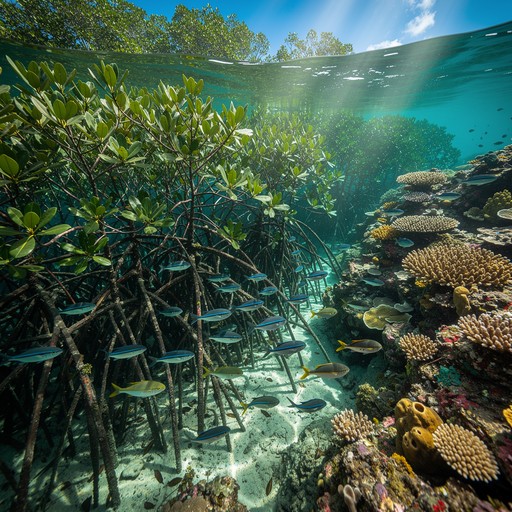
One of their most recognizable features is their complex root system. Some mangrove species have arching roots that appear to hold the trees above the water, while others develop roots that extend upward through the mud to absorb oxygen.
These roots help stabilize the trees, slow the movement of water, and trap sediment. Over time, this process can contribute to the formation and stabilization of coastal habitats.
There are several types of mangroves around the world, and each species has its own characteristics. Their appearance can vary depending on the local environment, water conditions, and the amount of tidal flooding.
Although mangroves may look like ordinary coastal trees at first glance, they are specially adapted to one of the most challenging environments in the plant world.
How Do Mangroves Survive in Saltwater?
Saltwater presents a major challenge for most plants because excessive salt can interfere with their ability to absorb water. Mangroves have evolved different strategies to manage this problem.
Some species can filter out much of the salt before it enters their tissues. Others can release excess salt through specialized glands in their leaves. Depending on the species, mangroves may also store salt in older leaves that eventually fall off.
Their roots are equally remarkable. Mangrove forests often grow in muddy, waterlogged soils where oxygen is scarce. Some species develop aerial roots that extend above the ground or water, allowing them to obtain oxygen from the air.
Mangroves are also adapted to changing tides. Their roots must withstand periods of flooding, shifting sediment, and exposure to water movement. These adaptations make them particularly well suited to sheltered tropical coastlines.
However, mangroves are not invulnerable. Changes in water flow, coastal development, pollution, and rising sea levels can threaten their survival, especially when forests cannot expand inland as sea levels rise.
Why Are Mangroves So Important for Marine Life?
Mangrove forests are among the most valuable habitats in tropical coastal environments. Their dense roots create a network of sheltered spaces where many aquatic and terrestrial species can find food, protection, and breeding areas.
Young fish, crabs, shrimp, and other small organisms can hide among the roots, making it more difficult for predators to catch them. The shallow waters surrounding mangroves also provide feeding grounds for many species.
As leaves and other organic material fall into the water, they break down and contribute to the food web. This material supports microorganisms and small animals, which in turn provide food for larger species.
Mangroves are also important for birds. Some species use the trees for nesting, resting, or searching for food. Reptiles, mollusks, and numerous invertebrates may also depend on mangrove habitats.
Their influence extends beyond the forest itself. Healthy mangroves are connected to nearby seagrass meadows, coral reefs, lagoons, and coastal waters. Protecting these ecosystems together can help maintain the biodiversity of the wider marine environment.
For this reason, mangroves are not simply groups of trees growing near the sea. They are complex ecosystems that support many forms of life.
How Do Mangroves Protect Tropical Coastlines?
One of the most important benefits of mangroves is their ability to help protect coastlines from erosion and certain impacts of storms.
Their roots create a natural barrier that slows water movement and helps trap sediment. This can stabilize shorelines and reduce the erosion caused by waves, currents, and tidal action.
During storms, mangrove forests can also reduce some wave energy and help limit flooding in certain coastal settings. The level of protection depends on factors such as forest width, tree density, water depth, and storm strength.
Mangroves cannot prevent every coastal disaster, and they should not be considered a substitute for appropriate coastal planning. Nevertheless, healthy forests can form an important part of a natural coastal protection system.
This function is particularly valuable in the Caribbean, where tropical storms and hurricanes can affect coastal communities, infrastructure, and natural habitats.
By helping stabilize shorelines and supporting healthier coastal environments, mangroves contribute to the resilience of the places where people live, work, and travel.
Mangroves and Climate Change: What Is Blue Carbon?
Mangroves also play an important role in the global climate system because they absorb carbon dioxide as they grow and store carbon in their vegetation and soil.
This stored carbon is known as blue carbon when it is captured by coastal and marine ecosystems such as mangroves, seagrass meadows, and salt marshes.
Mangrove soils are particularly effective at storing carbon because they are often waterlogged and low in oxygen. Under these conditions, organic material decomposes relatively slowly, allowing carbon to accumulate in sediments over long periods.
The importance of this process goes beyond the trees themselves. A substantial amount of the carbon stored in mangrove ecosystems can be found underground rather than in the visible trunks and leaves.
When mangroves are destroyed or degraded, some of this stored carbon can be released back into the atmosphere. Protecting existing forests and restoring damaged areas can therefore help preserve these carbon stores.
Mangroves alone cannot solve climate change, but conserving them offers several benefits at once: protecting wildlife, supporting coastal communities, and maintaining important natural carbon reserves.
Are There Mangroves in the Dominican Republic?
Yes. The Dominican Republic has mangrove forests in several coastal areas, including lagoons, estuaries, bays, and protected wetlands.
These ecosystems are part of the country’s natural heritage and contribute to the diversity of its coastal landscapes. They are particularly important in areas where freshwater and seawater interact, creating suitable conditions for mangrove growth.
One notable destination is Los Haitises National Park, known for its mangrove channels, limestone formations, and rich biodiversity. Exploring its waterways can offer visitors a different perspective on the Dominican Republic’s natural environment.
Mangroves can also be found in coastal wetlands around the country, including areas associated with protected natural spaces such as the Bajo Yuna mangroves and wetlands in the Monte Cristi region.
The Dominican Republic’s protected-area system includes several important wetland and mangrove environments. These areas help safeguard natural habitats and the species that depend on them.
However, not every mangrove forest is open to visitors, and access conditions vary. Travelers should follow local regulations and choose responsible excursions that respect sensitive habitats.
What Threatens Mangrove Forests?
Despite their ecological importance, mangroves face pressure from human activities and environmental changes.
Coastal development is one major threat. Construction for housing, hotels, roads, marinas, and other infrastructure can lead to the clearing or fragmentation of mangrove forests. Development can also change the natural flow of water, affecting the conditions mangroves need to survive.
Pollution is another concern. Plastic waste, untreated wastewater, and contaminated runoff can damage coastal ecosystems and affect the animals that live there.
Changes to water flow can also have serious consequences. Dams, drainage systems, land reclamation, and poorly planned construction may alter the balance between freshwater and seawater or prevent sediment from reaching mangrove habitats.
Climate change adds further pressure through rising sea levels, changing rainfall patterns, and more intense coastal disturbances in some regions. Mangroves can sometimes adapt or migrate inland, but barriers such as roads and buildings may prevent them from doing so.
Protecting these forests requires more than planting new trees. Effective conservation must also preserve natural water flows, protect surrounding habitats, reduce pollution, and ensure that restoration projects use appropriate native species in suitable locations.
How Can Tourists Help Protect Mangroves?
Visitors to the Dominican Republic can help protect mangroves through a few simple but meaningful choices.
First, choose responsible tour operators that respect protected areas and follow local environmental rules. If you visit mangrove channels by boat or kayak, remain within permitted routes and avoid disturbing wildlife.
Second, never throw rubbish into the water or leave waste along the shore. Plastic and other debris can become trapped among the roots, where they are difficult to remove and may harm animals.
Third, avoid damaging roots or vegetation. Mangroves may look sturdy, but their roots and surrounding soils can be sensitive to trampling, boat impacts, and careless handling.
If you photograph wildlife, keep a respectful distance and avoid disturbing nesting birds or other animals. Do not feed wild animals unless an authorized conservation program specifically permits it.
You can also support local conservation initiatives and learn about the ecosystems you visit. Understanding why mangroves matter is an important first step toward appreciating and protecting them.
Finally, remember that a beautiful natural landscape is not always an invitation to explore every part of it. Some mangrove areas are protected precisely because their wildlife and vegetation need limited human disturbance.
Who are we?
Tropical Evasion is a local agency specialized in Tailor-made private tours across the Dominican Republic.
We offer authenticity, comfort, and safety, with tailor-made itineraries and personalized support.
📞 WHATSAPP CONTACT:
+1 (829) 424-1391
Embark on a Custom Adventure !
Experience unforgettable excursions!
Why Mangroves Matter for the Future of the Caribbean
Mangroves are essential to the health of tropical coastal environments. They support fish and other wildlife, stabilize shorelines, store carbon, and help reduce some of the impacts of waves and storms.
In the Dominican Republic and across the Caribbean, these forests are connected to the landscapes and marine ecosystems that make the region so special. They are also important to coastal communities whose livelihoods and well-being depend on healthy natural environments.
Protecting mangroves requires cooperation between governments, local communities, conservation organizations, businesses, and visitors. Preserving existing forests, restoring damaged areas, and managing coastal development responsibly are all important parts of this effort.
At Tropical Evasion, discovering the Dominican Republic means appreciating more than its beaches and turquoise waters. From the mangroves of Los Haitises to the country’s diverse coastal wetlands, nature offers countless opportunities to learn about the ecosystems that sustain the Caribbean.
Explore the Dominican Republic with Tropical Evasion
Whether you’re passionate about nature, cultural discoveries, or sea adventures, the Dominican Republic is full of treasures waiting to be explored. From the paradise beaches of Saona to the breathtaking peaks of Montaña Redonda, every excursion is an invitation to escape.
With Tropical Évasion, enjoy an exclusive and immersive experience in small groups, aboard luxury boats or off-road vehicles, for unforgettable moments far from traditional tourist routes.
Book your excursion now and let yourself be amazed by the authenticity of the Dominican Republic!
Follow us on social media…
Tu pensais avoir tout vu en République dominicaine ? 🇩🇴😂
Ici, « complet » est visiblement une notion très subjective. 😭
Et après ça, on ose encore se plaindre parce qu’on n’a pas de place assise dans le métro… 😂
Avoue, finalement t’es pas si mal installé ?
#dominicanrepublic #VieEnRD #VieLocale #DominicanLife #humour

Tu pensais avoir tout vu en République dominicaine ? 🇩🇴😂
Ici, « complet » est visiblement une notion très subjective. 😭
Et après ça, on ose encore se plaindre parce qu’on n’a pas de place assise dans le métro… 😂
Avoue, finalement t’es pas si mal installé ?
#dominicanrepublic #VieEnRD #VieLocale #DominicanLife #humour
…
40 ans, les pieds dans le sable et toujours autant de projets dans la tête. 🌴
Finalement, grandir c’est pas si mal.
Continuer à parcourir cette île, découvrir des endroits pour vous encore et encore pas et surtout vous donner envie de voir la République dominicaine autrement. 🇩🇴
Vieillir par contre… j’ai trouvé la parade. 😂
39 ➡️ 38
40 years old, my feet in the sand and still so many projects on my mind. 🌴
Turns out, growing up isn’t so bad after all.
I’ll keep exploring this island, discovering new places to share with you again and again, and above all, inspiring you to experience the Dominican Republic differently. 🇩🇴
Getting older, though… I’ve found a way around that. 😂
39 ➡️ 38
#happybirthday #republiquedominicaine #voyagerautrement #traveltips #instamood
40 ans, les pieds dans le sable et toujours autant de projets dans la tête. 🌴
Finalement, grandir c’est pas si mal.
Continuer à parcourir cette île, découvrir des endroits pour vous encore et encore pas et surtout vous donner envie de voir la République dominicaine autrement. 🇩🇴
Vieillir par contre… j’ai trouvé la parade. 😂
39 ➡️ 38
40 years old, my feet in the sand and still so many projects on my mind. 🌴
Turns out, growing up isn’t so bad after all.
I’ll keep exploring this island, discovering new places to share with you again and again, and above all, inspiring you to experience the Dominican Republic differently. 🇩🇴
Getting older, though… I’ve found a way around that. 😂
39 ➡️ 38
#happybirthday #republiquedominicaine #voyagerautrement #traveltips #instamood
…
They always show you the same Dominican Republic…
We prefer this one. 🇩🇴
On vous montre toujours la même République dominicaine…
Nous, on préfère celle-ci. 🇩🇴
They always show you the same Dominican Republic…
We prefer this one. 🇩🇴
On vous montre toujours la même République dominicaine…
Nous, on préfère celle-ci. 🇩🇴
…
Le Merengue pour les nuls…
Apprends à danser le merengue avec nous en 30 secondes!
En République dominicaine, le merengue ne s’apprend pas vraiment : il se vit ! Musique, déhanché et surtout beaucoup de bonne humeur. 🇩🇴🕺
Chez Tropical Évasion, on aime aussi vous faire découvrir le pays comme ça : ses traditions, son ambiance et tous ces petits moments qui font la vraie vie dominicaine. 🌴
Alors, qui pense pouvoir faire mieux ? 😂👇
Merengue for Dummies 🇩🇴😂
Learn how to dance merengue in 30 seconds with us… well, in theory. 😅
In the Dominican Republic, merengue isn’t really something you learn — it’s something you feel! Music, hip moves, and most importantly, lots of good vibes. 🇩🇴🕺
At Tropical Évasion, this is also how we love to show you the country: its traditions, its atmosphere, and all those little moments that are part of real Dominican life. 🌴
So… who thinks they can do better? 😂👇
#danse #merengue #republiquedominicaine #voyagerautrement #dominicanstyle
Le Merengue pour les nuls…
Apprends à danser le merengue avec nous en 30 secondes!
En République dominicaine, le merengue ne s’apprend pas vraiment : il se vit ! Musique, déhanché et surtout beaucoup de bonne humeur. 🇩🇴🕺
Chez Tropical Évasion, on aime aussi vous faire découvrir le pays comme ça : ses traditions, son ambiance et tous ces petits moments qui font la vraie vie dominicaine. 🌴
Alors, qui pense pouvoir faire mieux ? 😂👇
Merengue for Dummies 🇩🇴😂
Learn how to dance merengue in 30 seconds with us… well, in theory. 😅
In the Dominican Republic, merengue isn’t really something you learn — it’s something you feel! Music, hip moves, and most importantly, lots of good vibes. 🇩🇴🕺
At Tropical Évasion, this is also how we love to show you the country: its traditions, its atmosphere, and all those little moments that are part of real Dominican life. 🌴
So… who thinks they can do better? 😂👇
#danse #merengue #republiquedominicaine #voyagerautrement #dominicanstyle
…

